
The Mother Archetype
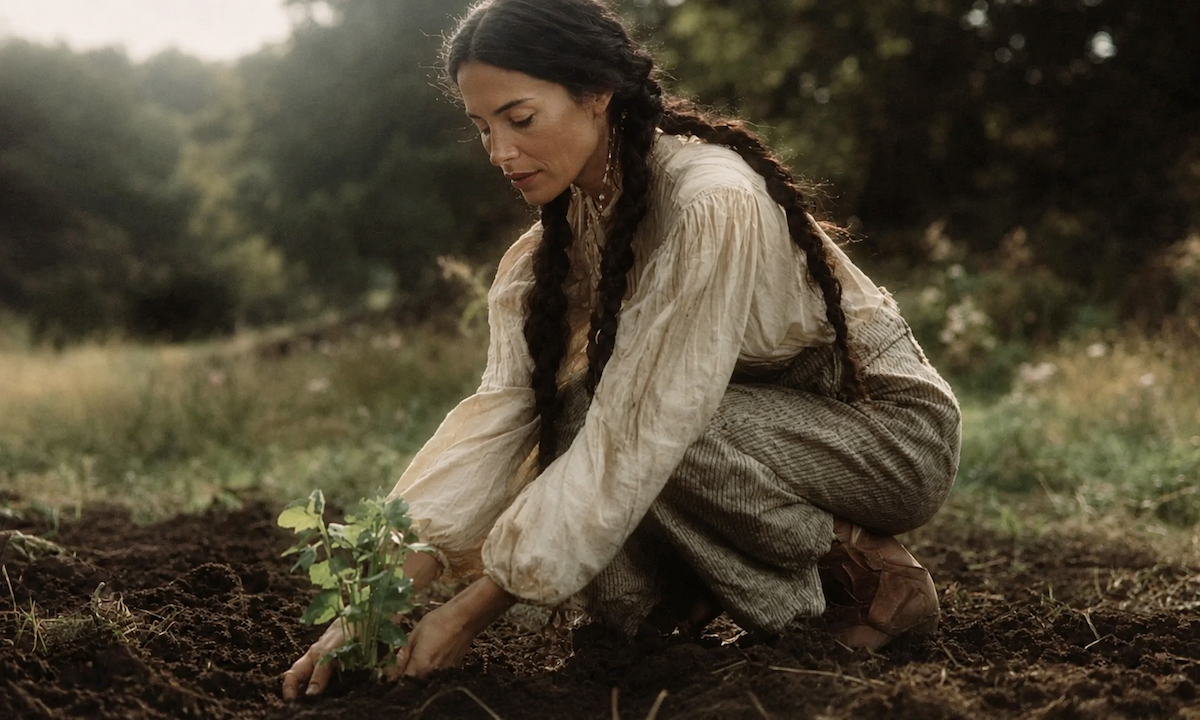
What is the mother archetype? When you think of mother, what comes up for you? It can be so different for so many of us. For some it can be warmth and nurture, for others it can be absence and void. And for others yet, it can be crushing. There are so many versions of her so where do we start and how do we begin to separate the archetype from lived experience?
That separation is the whole work of this piece. The Mother archetype is not your mother. She is not motherhood. She is a living pattern in the psyche of every person, whether or not they have ever borne or raised a child. And when we reclaim her from what patriarchy did to her, we get something far more powerful than a caretaker. We get an inner authority who knows how to tend and protect a life. Including your own.
If you've been following this series, you've met The Maiden and The Mystic. The Mother is the next turn of the same wheel.
snapshot: the mother archetype at a glance
Essence: A psychic function, not a social role. The part of us that stewards life-force.
Governs: Continuity of life, cycles and timing, containment, discernment, protection of what can be sustained.
Gifts: Boundary intelligence, generativity, rootedness, the capacity to receive, fierce discernment.
Shadow: Martyrdom, self-erasure, overfunctioning, burnout, the devouring mother, control disguised as care.
Longing: To protect and nourish what she loves without abandoning herself in the process.
Body signature: Rooting, receiving, boundaried fierceness. Or, in distortion: collapse, depletion, the body that gives until there is nothing left.
Not to be confused with: the Maiden (initiation, becoming), the Crone (endings, completion, release), or the Caregiver (a role, not an archetype).
01. the mother archetype is a psychic function, not a role
The thing I want to start with is one of the most important distinctions I think we can make in reclaiming the mother archetype, which is: the Mother is a psychic function, not a social identity. The Mother Archetype isn't a person or a social role, she's one of the ways your inner life operates. A built-in job your psyche does: protecting, stewarding, pruning.
We have been trained to hear "mother" and think of biology. A woman with children. A caretaker on call. But the archetype existed long before any of us were assigned that job, and it lives in people who will never take it on. The Mother is the part of the psyche that creates, contains, protects, discerns what to keep, and holds the fierce clarity to prune what drains the life she is tending.
At her core, she oversees the continuity of life. The cycles and the timing of things. The containment that lets something grow. The discernment that decides what gets protected and what gets pruned. She knows when to feed. She also knows when to withhold. Her orientation is toward stewardship, not toward endless giving.
So let's be precise about what she is not. She is not self-sacrifice. She is not emotional availability on demand. She is not moralized care, the kind we hand to women as a duty. And she is not biological reproduction.
This is what separates her from her neighbors in the psyche. The Maiden is initiation and movement, the pull toward becoming. The Crone is endings and completion, the wisdom of what is finished and ready to be released. The Caregiver is a role a culture assigns, not a force in the psyche. The Mother stands in the middle: she protects and sustains what has been made, and prunes only to keep it alive.
02. the realm of the mother
If the Maiden asks who am I becoming, the Mother asks a different question entirely: what will I protect, and what must I prune so the rest can live?
She is the reason anything survives past its first fragile moments. She holds the container in which growth becomes possible, and she reads timing the way the body reads hunger. She knows the season for feeding and the season for pruning.
And this is the part patriarchy worked hardest to erase: the Mother says no. Her care has teeth. She is not only the open hand. She is also the discernment that closes it. A real mother-force protects vitality, not comfort. She will disrupt your ease to keep you alive.
The Mother is complex in her wisdom. She blesses, AND she prunes. She creates, AND she releases what is no longer serving. Most of us were only handed half of her. The nurturing half. The endlessly available half. We were never taught that fierce discernment is also hers.
03. seeing the mother whole
You cannot reclaim what you cannot see. And most of us inherited a ‘good’, socially acceptable, version of the Mother disconnected from her depth: the caretaker, the endless open hand. Reclaiming her begins by gathering back the pieces that were stripped away and seeing her whole.
She is instinctual and fierce. Clarissa Pinkola Estés gave us the wild Mother who guards the life she tends and drives off what threatens it, who withholds as much as she gives, and who draws a hard line between mothering as instinct and motherhood as institution.
She lives in the body. Marion Woodman anchored her in appetite, in weight, in the difference between containment and engulfment. The body itself, she taught, is the first maternal field, the ground we either get rooted in or get abandoned within.
She is the fabric beneath the self. In The Great Mother, Erich Neumann describes her as the matrix in which identity forms, the field of containment that holds us before there is a "we" at all.
She was flattened on purpose. In Of Woman Born, Adrienne Rich separated motherhood as institution from mothering as lived experience, and exposed how the culture coerced women into moralized self-sacrifice and called it love.
And she is old. Older than the caretaker by thousands of years. The earliest cultures did not imagine the Mother as a helper. They knew her as the one who made the world. Nammu, the Sumerian sea that gave birth to heaven and earth. Neith of Egypt, self-created, weaving the cosmos into being. Thought Woman of the Pueblo, who speaks the world into existence by telling its story.
If we can hold all of it at once, instinct and body, matrix and creation, the caretaker myth falls away. And what remains is older, larger, and far more powerful than the version we we’ve been given.
04. the somatic signature of the mother archetype
So, how does the Mother archetype show up in the body?
the wounded mother: over-function and depletion
The wounded Mother does not show up as freeze. She shows up as a body that cannot stop. Chronic over-functioning and fawn, a nervous system trained to hold everyone, until it collapses.
BRACED TO HOLD. Her body leans toward everyone else's needs before her own. The upper back and shoulders carry, always. The jaw sets. She scans the room for what needs tending, muscles tensed to catch whatever might fall. There is no rest in her, because rest feels like abandonment.
UNABLE TO RECEIVE. Care comes toward her and the front body braces against it. She deflects the compliment, waves off the help, changes the subject. The throat tightens around "I need." She can pour out endlessly and take almost nothing in.
DEPLETED. Underneath the doing is a body running past empty. A bone-deep heaviness. The burn of someone giving from empty reserves. Eventually the over-function tips into shutdown: the flatness, the numbness, the collapse of a system.
GRIPPING. There is a second face to the wound. The hand that will not open. Holding too tight to what she loves, her children, her people, her plans. The clutch lives in the chest and the hands, control disguised as care, the body clinging to what it is afraid to lose.
the embodied mother
The embodied Mother's body has weight. Not heaviness, but groundedness. A settledness that others can feel and lean on. Her somatic signature is the felt experience of being a place where life can take root and grow.
ROOTED. Her weight drops into the pelvis, the sitz bones, the soles of the feet. There is a downward, gravitational quality to her, the opposite of the Maiden's forward lean. She is not going anywhere, and being here is the point. The breath runs low and full, belly and diaphragm, the breath of a body with room inside it.
A STEADY CONTAINER. Her nervous system can stay regulated while someone near her is not. She does not catch the panic in the room. She becomes the still center that others organize around. This is co-regulation lived in the body: a calm that is felt, not performed, wide enough to hold another person's storm without being pulled into it.
ABLE TO RECEIVE. The front body softens. She lets care land without deflecting it, lets herself be held without rushing to repay the debt. The throat opens around "I need this." Receiving stops being a threat and becomes replenishment, the in-breath that makes the out-breath possible.
THE FIERCE NO. Her boundary is not a concept, it is a sensation. The clear no that rises in the gut, firms the jaw, straightens the spine, and travels down the arms into hands that can close, push away, and hold the line. Her care has teeth, and the teeth live in the body.
TENDING WARMTH. A warmth lives in her chest and belly, the felt sense of tending. It moves toward what she loves without emptying her. She can pour and stay full, because the warmth is fed from the ground she stands on, not scraped up from an empty floor.
05. the devouring mother archetype
Every archetype has a shadow, and the Mother's has a name that has been rising in the culture for good reason: the devouring mother.
The devouring mother is what the maternal force becomes when protection curdles into possession. She looks like love. She often believes she is love. But underneath the care is a refusal to let the ones she "protects" be claimed by their own lives. She smothers. She enmeshes. She keeps her children (literal or symbolic) small enough to stay close, and she calls the caging safety.
Jung and the analysts after him traced this carefully. Neumann described the Great Mother's terrible face, the one that creates and also consumes. Woodman named the devouring mother in the body, in the appetites that get managed and the vitality that gets quietly extinguished under the weight of too much care. The devouring mother does not raise you to leave. She raises you to need her.
Her tools are overprotection, guilt, and control dressed as concern. Some versions demand saintly compliance. Others rule through weakness, using their own fragility as the leash. Either way, the message underneath is the same: your becoming is a threat to my belonging, so I will keep you here.
And heres the kicker, because this is not only about other people's mothers. The devouring mother can live in you, aimed at your own creations, your projects, your relationships, even the younger parts of yourself. Anywhere you confuse control with care. Anywhere you protect something so tightly it ceases to grow, expand, emerge and transform. Meeting that in yourself is shadow work, and it is not always comfortable. If you want a guided way in, my 7-Day Somatic Shadow Series walks through this type of self meeting.
06. the wounded mother and the mother wound
The devouring mother is one face of the shadow. The Wounded Mother is the other, and she is more culturally rewarded, and far more common.
The Mother's shadow also includes martyrdom. Self-erasure. Overfunctioning. Burnout. Resentment that has nowhere to go. The savior complex. Emotional smothering. Fear of abandonment expressed as control. If the devouring mother gives too much of the wrong thing, the wounded Mother gives too much of everything until there is nothing left of herself.
This is the depleted feminine, and it was manufactured. Patriarchal extraction needed women whose care was infinite and unpaid, so it moralized self-sacrifice and called depletion virtue. Generations of people learned that a good mother, a good partner, a good woman, is one whose identity, worth and value are tied to her ability to give.
Which brings us to the term you may have come here for: the mother wound.
The mother wound is what forms in us when the maternal field we needed was distorted, absent, or conditional. When we received physical care but not emotional attunement. When love arrived only in exchange for compliance. When the person who was meant to be our safe harbor was, herself, too depleted or wounded to be one. It shows up later as difficulty receiving care, as perfectionism and the sense that love must be earned, as boundaries that are either nonexistent or built into walls, as a body that learned to disappear in order to stay loved.
Let me be clear: this isn’t a blame game. If any of that is landing, be gentle with the recognition. It’s not about pointing the finger, but about recognition of what is true in us. This is a wound that is often handed down a line of women who were each asked to abandon themselves. Seeing that clearly is the beginning of setting it down.
And, setting it down requires a reframe. Healing the Mother is not about giving more. It is about restoring discernment, containment, and authority.
07. remothering: reclaiming the mother archetype
Reclaiming the Mother is not about becoming a caretaker, but though learning to protect and nourish yourself the way you have always known how to protect and nourish everyone else.
The Mother is not a destiny and she is not a role you either got assigned or missed. She is a phase of psychic development available to anyone, the maturation that follows the Maiden's becoming. This stage governs inner authority, generativity, stewardship, relational wisdom, and sustained creativity.
Remothering is how you get there. It happens through small, repeatable acts of contact.
RECEIVING. Practice letting care in. When someone offers something, notice the impulse to deflect or repay, and instead simply let the good thing arrive for you.
THE NO THAT PROTECTS THE YES. Every boundary you hold is the Mother's teeth returning. Start with the small ones. Feel where the no lives in your body before you speak it.
TENDING YOUR INNER ECOSYSTEM. Ask what you actually need today, then meet one of those needs without negotiating it away. This is nurturing turned inward.
PRUNING WHAT DRAINS YOU. Not everything alive deserves to keep feeding on you. Notice what quietly depletes the life you are tending, and cut it back so the rest can thrive. The Mother does not only plant. She prunes.
BECOMING YOUR OWN SUPPORT. When the old ache for someone to finally mother you rises, meet it yourself. I’m not saying bypass the grief, but I am inviting you to stop outsourcing your own care.
This is hard-fought work, and it doesn’t happen overnight. Stay with it.
08. what will you protect?
The Maiden asks who you are becoming. The Mother asks what you will steward now that you are here.
So sit with her questions:
Where in your life are you giving beyond empty and calling it love?
Where has your care become control, aimed at someone else or at yourself?
What in your life is quietly draining the vitality of what you love, and needs to be pruned back?
What would it mean to protect your own vitality with the fierceness you save for everyone else?
The Mother is not the endless open hand. She is the one who knows when to feed and when to withhold, who blesses and who prunes, who protects the life she loves without laying herself on the altar of it.
And that Mother is available to you.

Hey! I’m Taren.
I'm a somatic practitioner and guide supporting people in reclaiming the powerful parts of themselves they’ve been taught to abandon.
My work weaves mythology, embodied trauma healing, and specific frameworks for transformation knowing that understanding what happened isn't enough.
I help people navigate the thresholds of identity, healing, and personal transformation through depth-oriented psychology, nervous system work, and mythic storytelling. But more than that, I help you build a foundation you can actually live from.
If you're in the middle of your unraveling and ready to meet yourself, join my email community. I share writing on power, the feminine, embodiment, and what it costs to come home to yourself.



The Mother archetype was never just the soft caretaker we were handed. Come meet the whole of her.